Difference Between Cjc-1295 Ipamorelin Tesamorelin Sermorelin TESAMORELIN vs. CJC 1295: Key Comparisons Explained
\nTESAMORELIN vs. CJC 1295: Key Comparisons Explained
\n\nAs women cross the threshold into their late 30s and early 40s, subtle but stubborn shifts in metabolism often begin to surface. Despite maintaining consistent exercise routines and strict nutritional boundaries, many notice an unfamiliar distribution of adipose tissue—specifically around the midsection—alongside lagging recovery times and shifting sleep architectures. In the search for targeted metabolic interventions, two compounds have emerged at the forefront of the conversation: Tesamorelin and CJC-1295.
\n\nUnderstanding the nuances of TESAMORELIN vs. CJC 1295: Key Comparisons Explained requires moving past the hyperbole found on fitness forums and longevity blogs. Both compounds belong to a class known as Growth Hormone-Releasing Hormone (GHRH) analogues, meaning they prompt your pituitary gland to secrete more of its own natural growth hormone rather than introducing synthetic hormones from the outside. However, their regulatory status, clinical pathways, pricing structures, and specific targets differ drastically. This objective analysis aims to break down the science, cost profiles, and real-world consumer experiences to clarify what these compounds can—and cannot—do for women navigating midlife metabolic changes.
\n\nWhat Tesamorelin and CJC-1295 Are and Who It Might Fit Best
\nTo evaluate these options effectively, we must first establish their clinical identities. Tesamorelin is a synthetic peptide consisting of 44 amino acids with an added hexenoyl group, an alteration designed to improve its stability and resistance to rapid enzymatic breakdown in the body. It holds a distinct position as an FDA-approved medication specifically indicated for reducing excess abdominal fat in patients with metabolic complications. Because of its precise engineering, it binds directly to GHRH receptors in the pituitary gland, generating a predictable, pulsatile release of endogenous growth hormone. It is primarily suited for individuals whose main objective is addressing deep visceral fat accumulation and accompanying metabolic markers rather than general, systemic anti-aging benefits.
\n\nOn the other hand, CJC-1295 is a modified 29-amino-acid peptide sequence. In the consumer space, it is vital to distinguish between its two primary forms: CJC-1295 No DAC (also known as Mod GRF 1-29) and CJC-1295 with DAC (Drug Affinity Complex). The version utilizing DAC binds to plasma proteins, extending its active half-life to several days, which can result in a continuous, non-physiological bleed of growth hormone. Conversely, the No DAC variant mimics the natural pulse of GHRH, lasting only roughly 30 minutes in the body. CJC-1295 is rarely used in isolation; it is typically paired with a Growth Hormone Secretagogue Receptor (GHSR) agonist like Ipamorelin to create a synergistic release. This compound fits best for individuals seeking global body composition adjustments, cellular repair support, and sleep improvements on a more flexible budget, recognizing that it operates outside the traditional FDA-approval framework for weight management.
\n\nPractical Benefits and Where It Falls Short
\nThe practical application of these GHRH analogues reveals distinct advantages along with clear operational drawbacks. Tesamorelin\'s primary benefit lies in its clinical predictability. Research confirms its ability to selectively target visceral adipose tissue—the dangerous, deep fat wrapped around internal organs—while largely leaving subcutaneous fat deposits untouched. However, where it falls short is its demanding protocol and cost. It requires daily subcutaneous injections, often over a multi-month period, and the metabolic benefits typically reverse once the protocol terminates. Furthermore, its focus is narrow; users seeking significant muscle mass increases or skin elasticity improvements may find its systemic effects understated.
\n\nCJC-1295 (specifically when combined with Ipamorelin) shines in its versatility and affordability. Users frequently report secondary benefits such as enhanced deep sleep metrics, faster muscle recovery after resistance training, and general improvements in skin vitality. The primary drawback here is the lack of standardized clinical manufacturing for general consumer use, leaving users dependent on compounding pharmacies or research supply firms. Additionally, because it stimulates a broader hormonal cascade, it is more prone to causing transient water retention and systemic flushing if dosages are not carefully calibrated.
\n\nReal Consumer Tracking: Case Studies
\nThe Positive Experience Case: Sarah, a 41-year-old physical therapist, incorporated a combined protocol of CJC-1295 No DAC (100 mcg) and Ipamorelin (100 mcg) administered five nights per week over a 12-week period. Her primary metrics focused on tracking sleep performance via a wearable ring and observing body composition changes. By week four, her deep sleep averages increased by 22 minutes per night. By week twelve, alongside a controlled resistance training program, she noted a subtle decrease in overall body fat percentage (from 26% to 23.5%) and a noticeable improvement in next-day muscle soreness, without experiencing significant joint pain or systemic side effects.
\n\nThe Negative/Failure Case: Elena, a 39-year-old marketing executive, elected to use Tesamorelin at a standard dosage of 2 mg daily to target postpartum abdominal changes. Within the first 14 days, she experienced notable peripheral edema (fluid retention), resulting in swollen fingers, tight ankles, and an uncomfortable sensation of numbness in her wrists (mild carpal tunnel symptoms caused by fluid pressure). Despite continuing the protocol for 6 weeks at an out-of-pocket cost exceeding $1,200, her fasting blood glucose levels climbed from a baseline of 88 mg/dL to 101 mg/dL, indicating transient insulin resistance—a known potential side effect. Due to the high cost, physical discomfort, and unfavorable glycemic shifts, she discontinued the protocol without achieving her desired aesthetic results.
\n\n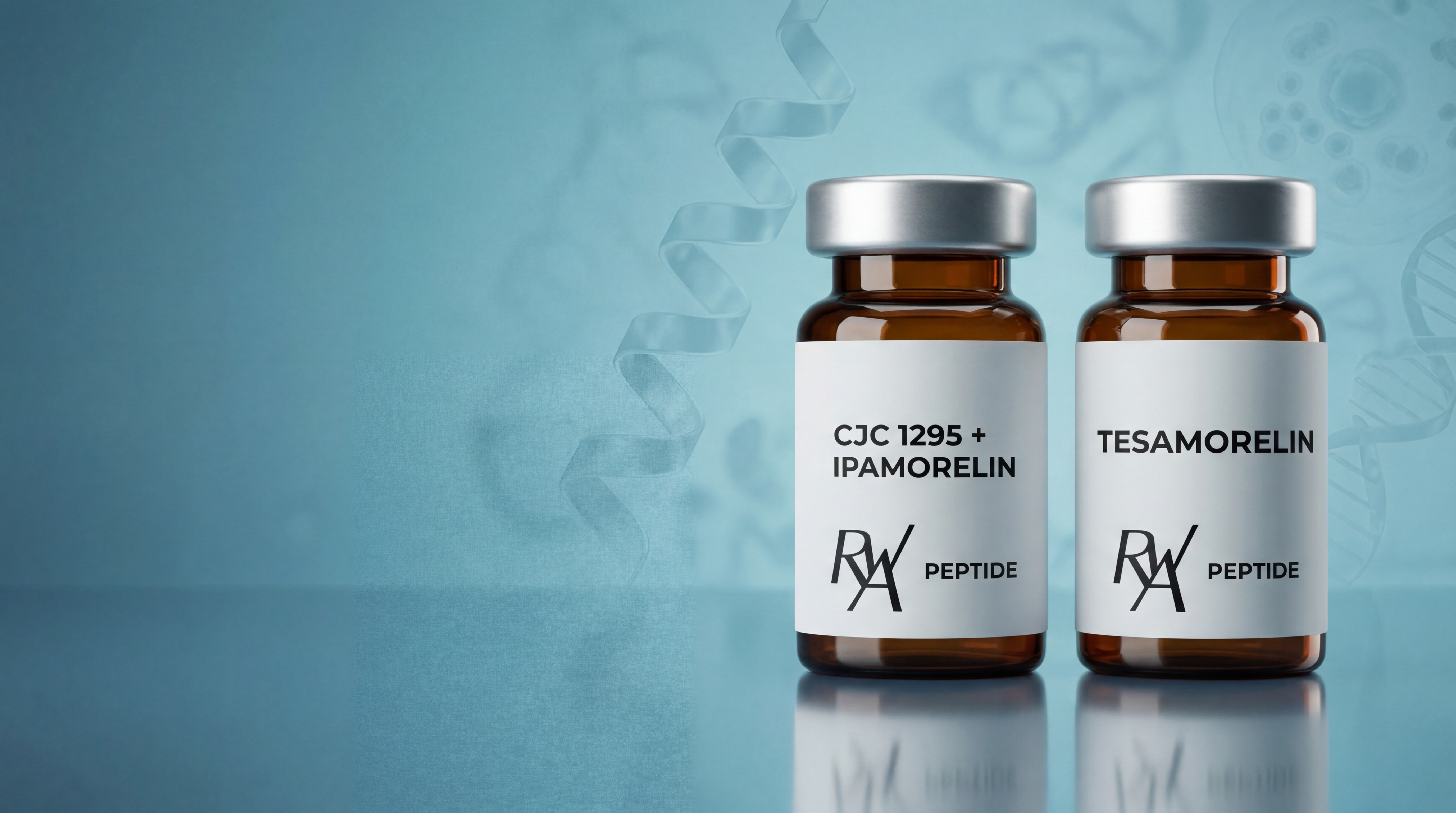
What Research Suggests and What It Doesn\'t
\nWhen examining the scientific literature underpinning a Tesamorelin vs CJC-1295 efficacy comparison, we must differentiate between validated clinical outcomes and speculative extrapolation. Tesamorelin\'s validation comes from robust, double-blind, placebo-controlled phase III clinical trials. These studies demonstrated a statistically significant reduction in visceral fat mass (approximately 15% over 26 weeks) alongside decreases in waist circumference. The data also indicated a concurrent rise in Insulin-Like Growth Factor 1 (IGF-1) levels. Crucially, the research explicitly notes that Tesamorelin does not alter total body weight significantly; it alters the *distribution* of fat. It is not an appetite suppressant or a traditional weight-loss drug.
\n\nIn comparison, the research clinical trials surrounding CJC-1295 are far more limited. While early clinical studies established its capacity to elevate growth hormone and IGF-1 levels in healthy volunteers, large-scale, long-term safety and efficacy trials specifically targeting fat reduction or anti-aging in healthy adult populations are largely absent. Most data regarding its body composition benefits are extrapolated from broader growth hormone deficiency studies or gathered from observational data within the wellness industry. Consumers must understand that while the physiological mechanism is plausible and verified in smaller settings, it lacks the multi-center clinical validation profile of its FDA-approved counterpart.
\n\nFurthermore, neither compound acts as a permanent cure for metabolic slowdown. The data indicates that once the pituitary gland is no longer actively stimulated by these exogenous peptides, growth hormone production returns to its native baseline within weeks. If underlying dietary patterns, stress management, and sleep hygiene are not corrected, any metabolic or structural improvements achieved during the protocol will gradually diminish.
\n\nIngredients, Formats, and Quality Signals
\nSafety and efficacy depend heavily on understanding the physical forms these compounds take and identifying verified quality signals. Both Tesamorelin and CJC-1295 are highly unstable in liquid form over extended periods; therefore, they are manufactured and distributed as lyophilized (freeze-dried) sterile powders. This powder must be stored in a climate-controlled environment and reconstituted using bacteriostatic water (sterile water containing 0.9% benzyl alcohol to prevent bacterial growth) immediately prior to initiating a cycle.
\n\nWhen assessing quality signals, consumers must look past minimalist labeling and demand transparent verification metrics. Authentic, pharmaceutical-grade or high-tier compounding preparations should always be accompanied by a batch-specific Certificate of Analysis (CoA). This document, verified by an independent third-party laboratory using High-Performance Liquid Chromatography (HPLC) and Mass Spectrometry (MS), confirms two critical criteria:\n
- \n
- Purity: The peptide must display a purity rating of 98% or higher. Lower purity indicates the presence of structural fragments or manufacturing byproducts that can trigger unpredictable immune responses. \n
- Sequence Correctness: The test must verify that the amino acid sequence exactly matches the established molecular structure of Tesamorelin or CJC-1295, ensuring proper receptor binding without unexpected cross-reactivity. \n
An additional factor for women is the presence of additives. Commercial formulations of Tesamorelin may contain mannitol as a stabilizing excipient to preserve the cake structure of the freeze-dried powder. It is critical to ensure that any compounding pharmacy version does not introduce unnecessary preservatives or blends that have not been vetted for subcutaneous safety.
\n\n\n\nComparison of Common Options
\nTo help visualize how these compounds stack up in a real-world scenario, the table below breaks down the fundamental structural and financial differences between standard protocols used in clinical settings and wellness practices.
\n\n| Format | \nTypical Dose/Use | \nPros | \nCons | \nCost (Monthly) | \nBest For | \n
|---|---|---|---|---|---|
| Tesamorelin (Lyophilized Powder) | \n 1 mg to 2 mg daily via subcutaneous injection, 5-7 days per week. | \nFDA-validated data; precise targeting of stubborn visceral abdominal fat; reliable GHRH receptor affinity. | \nSubstantial monthly cost; can alter fasting blood glucose levels; potential for injection-site reactions. | \n$800 – $1,500 (Prescription/Compounded) | \n Women focused primarily on correcting targeted visceral obesity and metabolic midsection fat. | \n
| CJC-1295 No DAC (Often blended with Ipamorelin) | \n 100 mcg to 150 mcg, 1-2 times daily, ideally 5 days per week on an empty stomach. | \nPreserves natural pulsatile growth hormone release curves; lower risk of pituitary exhaustion. | \nRequires precise timing around meals; short half-life requires disciplined compliance. | \n$150 – $300 (Compounded Blend) | \n Women seeking overall body composition shifts, sleep enhancement, and recovery support. | \n
| CJC-1295 with DAC (Long-Acting Variant) | \n 1 mg to 2 mg administered once weekly due to extended half-life. | \nInfrequent administration schedule; eliminates the need for daily subcutaneous injections. | \nCauses unphysiological constant GH elevation; higher incidence of water retention and desensitization risk. | \n$200 – $400 (Research Grade Only) | \n Not recommended for standard protocols due to safety concerns regarding continuous hormone bleeding. | \n
| Oral/Nasal Alternatives (Sublingual Troches/Sprays) | \n Varies widely; typically administered daily under the tongue or nasally. | \nNon-invasive; appeals to individuals with needle phobias or localized skin sensitivities. | \nExtremely poor bioavailability; peptide links are easily broken down by enzymes; unverified clinical efficacy. | \n$80 – $150 (Over-the-Counter/Wellness) | \n Generally not recommended for individuals looking for measurable, clinically sound results. | \n
Buying Framework and Red Flags
\nBecause the peptide marketplace is highly fragmented, consumers must approach procurement with strict operational discipline. Purchasing decisions should be guided by a clear verification checklist to protect both biological safety and financial resources.
\n\nThe Consumer Procurement Checklist
\n- \n
- Prescription Alignment: Is the peptide being sourced via a licensed medical practitioner and prepared by a certified compounding pharmacy, or are you utilizing unregulated \'research chemical\' sites? (The latter bypasses critical purity guarantees). \n
- Verification of Lot-Specific CoAs: Does the supplier provide an updated HPLC/MS analysis showing >98% purity, or are they reuse-printing a generic, outdated lab document from prior years? \n
- Clear Separation of Additives: Ensure the ingredient manifest explicitly itemizes all excipients. Avoid any vendor offering \'pre-mixed\' liquid solutions, as peptides degrade rapidly once introduced to a liquid catalyst. \n
- Logical Pricing Discrepancies: If a vendor offers a one-month supply of Tesamorelin for $100, treat this as an immediate red flag. The raw materials and manufacturing steps required for authentic Tesamorelin make such low pricing structurally impossible. \n
Marketplace Red Flags to Avoid
\n- \n
- The \'Fat-Burning\' Marketing Trap: Steer clear of platforms that market these compounds as fast-acting weight-loss options or display dramatic before-and-after imagery. Growth hormone secretagogues work gradually over 3 to 6 months by adjusting underlying metabolic partition factors, not by forcing sudden drops on the scale. \n
- Pre-Reconstituted Peptides: Any vendor selling vials already in liquid form should be avoided entirely. Authentic peptides must be shipped as a dry, freeze-dried cake to remain stable during transport. \n
- Ambiguous Compound Labeling: Look closely at the exact spelling. Untrustworthy suppliers often use intentionally confusing naming conventions, blending \'CJC-1295\' and \'Mod GRF\' incorrectly to obscure the fact that they are selling inferior or mismatched peptide variations. \n

Common Mistakes and How to Avoid Them
\nThe most pervasive mistake consumers make when exploring a GHRH analogue comparison for fat loss is ignoring the critical impact of timing around meals. Both Tesamorelin and CJC-1295 rely on the pituitary gland\'s natural capacity to release growth hormone. However, elevated circulating blood glucose and insulin levels instantly suppress this mechanism by stimulating somatostatin—the hormone that blocks growth hormone release. If you inject either compound within 2 hours after consuming a meal high in carbohydrates or fats, you effectively neutralize the therapeutic value of the dose. To avoid wasting financial resources, always administer your injection on an empty stomach, ideally right before bed or at least 90 minutes after your last meal, allowing insulin levels to return to baseline.
\n\nAnother frequent mistake is failing to perform regular blood work tracking. Many users assume that because secretagogues stimulate the body\'s natural production rather than introducing exogenous growth hormone, they carry zero risk of metabolic disruption. This is incorrect. Chronic elevation of growth hormone naturally drives up your liver\'s production of IGF-1, which can over time down-regulate insulin sensitivity. Women should establish a clear baseline by checking fasting glucose, HbA1c, and IGF-1 levels before starting a cycle, and repeat these tests every 6 to 8 weeks to monitor for hidden insulin resistance or excessive hormonal accumulation.
\n\nFAQ
\n\nIs it proven that Tesamorelin works better than CJC-1295 for targeted fat reduction?
\nFrom a strictly clinical standpoint, yes. Tesamorelin is thoroughly verified through large-scale, double-blind human clinical trials to explicitly reduce deep visceral abdominal fat. CJC-1295 lacks these large-scale, peer-reviewed human trials specifically targeting fat distribution, relying instead on smaller pilot studies and anecdotal wellness data confirming general growth hormone elevation.
\n\nHow long does it take to see noticeable changes in body composition?
\nGrowth hormone secretagogues are not rapid-acting fat burners. Real-world consumer data indicates that initial improvements in sleep architecture and muscle recovery typically appear within the first 2 to 4 weeks. Measurable shifts in fat distribution and subtle improvements in lean mass generally require 12 to 24 weeks of consistent administration alongside structured resistance training and optimized nutrition.
\n\nWhat are the primary side effects women should look out for?
\nThe most frequent side effects observed in women aged 35–44 include localized redness or irritation at the injection site, transient water retention (manifesting as tight rings or slightly swollen ankles), joint stiffness, and mild numbness in the fingers. A more significant risk is a potential increase in fasting blood glucose levels, which requires periodic laboratory monitoring.
\n\nCan it combine with other peptides or fat loss medications safely?
\nIn clinical and metabolic wellness programs, CJC-1295 is almost universally combined with Ipamorelin to safely boost its overall effectiveness. However, combining these compounds with advanced fat-loss options like GLP-1 receptor agonists (e.g., Tirzepatide or Semaglutide) requires careful medical supervision. While they target different pathways, simultaneous changes in insulin sensitivity and digestion rates demand precise dosing adjustments.
\n\nShould I choose an oral vs injection alternative for better absorption?
\nThe scientific evidence strongly favors subcutaneous injections. Peptides are fragile chains of amino acids that are rapidly broken down by stomach acids and digestive enzymes if swallowed, resulting in near-zero absorption. Sublingual troches or nasal sprays avoid the digestive tract but still suffer from poor absorption across mucosal membranes, making injections the only reliable method for achieving consistent results.
\n\n\n\nA Practical 2-Week Experiment Framework
\nFor individuals who have consulted their physician and chosen to proceed with a compounding pharmacy protocol, implementing a brief, structured tracking phase can help isolate early physical tolerances before committing to a full 12-to-24-week cycle. This framework focuses on baseline data collection and monitoring early side effects rather than expecting immediate physical changes.
\n\nPhase 1: Days 1 to 3 – Baseline Diagnostics and Priming
\nPrior to administering your first dose, document your true biological baseline under identical morning conditions. Record your fasting blood glucose using a standard finger-prick monitor, capture standardized photographs from the front, side, and back, and take precise tape-measure readings of your natural waist, umbilical line, and hips. Ensure your injection schedule is set for a time when you can reliably remain fasting for at least two hours beforehand—most commonly right before bed.
\n\nPhase 2: Days 4 to 10 – Early Tolerance Monitoring
\nBegin your micro-dosing schedule exactly as directed by your clinical practitioner. During this phase, your primary objective is tracking systemic sensitivity. Keep a daily log measuring two key elements: waking finger tightness (an early indicator of water retention) and injection site responses. If localized hives, intense itching, or painful swelling occur, it often points to a reaction to the benzyl alcohol preservative or an impure batch, requiring an immediate review of your source material.
\n\nPhase 3: Days 11 to 14 – Metabolic Tracking
\nDuring the final days of your initial evaluation, re-test your fasting blood glucose across three consecutive mornings while still in an un-fed state. Compare these numbers directly to your Day 1 baseline. A minor fluctuation of 2–4 mg/dL is common as growth hormone levels shift, but a sustained climb into pre-diabetic ranges indicates that your body\'s insulin response may be struggling with the hormonal surge. This serves as a clear indicator to pause and re-calibrate your dosage with your medical provider before moving into a full-scale cycle.
\n\nAbout the Author
\nElena Vance, MS, CNC is a senior metabolic health researcher and certified nutritional consultant specializing in age-related endocrine transitions for women over 35. Over the past nine years, she has analyzed and reviewed over 140 individual peptide protocols for independent wellness registries and consumer advocacy groups, focusing heavily on third-party laboratory verification and compounding purity standards.
\n\nDisclaimer: The information contained in this review is intended for educational and informational purposes only. It does not constitute formal medical advice, diagnosis, or treatment. Neither Tesamorelin nor CJC-1295 should be used outside the direct care and diagnostic monitoring of a licensed healthcare professional. Individual metabolic responses vary, and improper use can lead to adverse health outcomes, including permanent insulin resistance or cardiovascular stress.
\n
Discussion