Does Ipamorelin Increase Appetite How does Ipamorelin make you feel?
\nHow Does Ipamorelin Make You Feel? A Realistic, No-Hype Review
\n\nIf you have spent any time browsing fitness forums, biohacking subreddits, or wellness clinics over the last year, you have likely run into discussions about growth hormone secretagogues. Among them, a synthetic pentapeptide called Ipamorelin frequently tops the list. But cut through the aggressive marketing and the hyperbolic fitness influencer claims, and a fundamental question remains for the average guy trying to optimize his health: how does Ipamorelin make you feel?
\n\nFor young men between the ages of 18 and 24, navigating the landscape of performance and recovery tools can be incredibly confusing. You are often bombarded with conflicting information—some sources claim it is a miracle compound for building lean mass overnight, while others dismiss it entirely. This article approaches the topic from an objective, consumer-review perspective. We will examine the realistic, day-to-day sensations, the subtle timeline of shifts, and the potential downsides, ensuring you have the data needed to cut through the noise without the exaggeration.
\n\nWhat Is the Ipamorelin Peptide Experience and Who It Might Fit Best
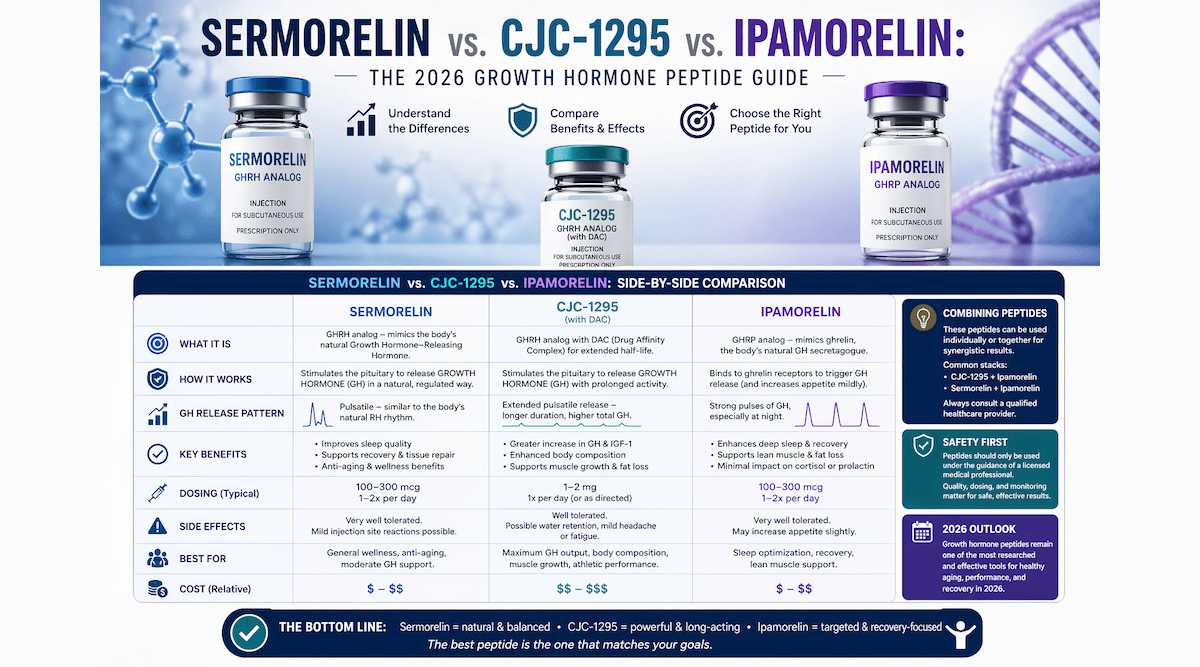
\nTo understand the day-to-day physical sensations, you first need to understand what the compound actually is. Ipamorelin is a selective growth hormone secretagogue (GHS). It mimics ghrelin—often called the "hunger hormone"—and binds to specific receptors in the brain to prompt your pituitary gland to release pulses of your body’s own natural growth hormone. Unlike older generations of peptides in this class (such as GHRP-2 or GHRP-6), it is highly selective. This means it rarely triggers a massive spike in appetite, nor does it significantly elevate cortisol (the stress hormone) or prolactin.
\n \nBecause of this selective mechanism, the baseline answer to how does Ipamorelin make you feel is surprisingly underwhelming in the short term: it does not make you feel "wired," stimulated, or suddenly hyper-charged. Instead, the compound works in harmony with your endocrine system\'s natural rhythms, meaning the sensations accumulate slowly over weeks rather than minutes.
\n \nWho fits this profile best? Typically, it is explored by individuals who are already maximizing their nutrition and weight training but feel stuck by their body\'s recovery limits. If you are a young athlete training intensely 5 to 6 days a week, experiencing persistent joint soreness, or struggling to get restorative sleep despite proper bedtime hygiene, this pathway is often evaluated by clinicians to optimize natural physiological repair loops. It is distinctly not designed for individuals looking for a shortcut to replace a poor diet or an inconsistent lifting routine.
\n\nPractical Benefits and Where It Falls Short
\nWhen assessing a peptide protocol, weighing real-world case studies provides the most realistic picture of what to expect. Below are two distinct experiences that showcase the range of outcomes real users face over a standard 12-week timeframe.
\n\nCase Study 1: The Positive Responder
\nMarcus, a 23-year-old amateur powerlifter, integrated a clinically supervised, nightly subcutaneous injection of Ipamorelin (300 mcg) for 12 weeks. During the first 7 days, he reported no noticeable changes in the gym or on the scale. However, by week 3, the primary shift was subjective sleep quality. He noted waking up feeling significantly less groggy, even on days when his sleep window was limited to 7 hours. By week 6, his typical post-squat-day knee soreness resolved within 24 hours rather than his usual 48 hours. While his overall weight only fluctuated by a net loss of two pounds, his body composition showed a subtle, tightening effect around his midsection, and his muscle fullness remained constant despite a slight caloric deficit. For Marcus, the compound worked exactly as intended—not as a massive mass-builder, but as an aggressive recovery accelerator.
\n\nCase Study 2: The Non-Responder / Side-Effect Match
\nConversely, consider the experience of Tyler, a 21-year-old college student who purchased what was labeled as "research-grade" Ipamorelin online without medical oversight. Eager for fast results, he began injecting 400 mcg daily. Within the first two weeks, instead of experiencing deeper sleep, Tyler developed persistent, mild tension headaches roughly 30 minutes post-injection. By week 4, he noticed substantial water retention—his fingers felt swollen, his ankles left socks marks, and the scale jumped 5 pounds of fluid weight. Furthermore, because he had not addressed his baseline sleep deprivation and erratic diet, he experienced no noticeable improvements in gym recovery or fat loss. Disappointed by the side effects and the lack of magic muscle growth, he discontinued use at week 5. Tyler’s case highlights that the compound can easily fall short if product quality is unverified, dosages are mismanaged, or lifestyle foundations are ignored.
\n\n
What Research Suggests and What It Doesn\'t
\nWhen examining how the Ipamorelin peptide experience affects the body, it is critical to separate hard scientific data from anecdotal gym talk. In clinical literature, Ipamorelin is well-documented as a highly stable, selective growth hormone secretagogue. In animal models and early-phase human trials, it consistently demonstrates the ability to stimulate a robust pulse of growth hormone without disrupting baseline luteinizing hormone (LH), follicle-stimulating hormone (FSH), or thyroid-stimulating hormone (TSH).
\n \nHowever, the science also presents strict limitations that many marketing platforms conveniently omit:
\n- \n
- No Direct Muscle Hypertrophy: Growth hormone secretagogues do not act like anabolic steroids. They do not directly bind to androgen receptors to force rapid muscle protein synthesis. Instead, any muscle preservation or growth is a downstream effect of increased Insulin-like Growth Factor 1 (IGF-1) and improved sleep-induced recovery. \n
- The Ceiling Effect: Your pituitary gland has a natural limit on how much growth hormone it can store and secrete at one time. Increasing your dose past the standard saturation point (typically 100 mcg to 300 mcg per dose) will not cause more growth hormone release; instead, it simply increases your risk of side effects like headaches and severe fluid retention. \n
- Long-Term Uncertainty: While short-term safety profiles (8 to 12 weeks) are generally favorable under medical supervision, extensive multi-year human safety data specifically for elective cosmetic or athletic use remains limited. Unsupervised, continuous use can potentially alter glucose tolerance or desensitize the target receptors over time. \n
Ingredients, Formats, and Quality Signals
\nIf you are exploring a legitimate protocol, you will find that true Ipamorelin is a synthetic chain of five amino acids (a pentapeptide) with the structural sequence Aib-His-D-2-Nal-D-Phe-Lys-NH2. Because it is a fragile peptide chain, its bioavailability is highly dependent on its delivery format.
\n \nThe gold standard utilized in clinical settings is lyophilized (freeze-dried) powder contained in sterile glass vials. This powder must be reconstituted using bacteriostatic water before use. It is administered via a sub-1ml insulin syringe into subcutaneous fat tissue (typically around the abdomen or thigh).
\n \nIn recent years, the market has seen a surge in alternative formats, such as oral capsules, sublingual drops, and nasal sprays. From a pharmacological standpoint, these alternative formats face massive hurdles. The harsh enzymes in the human digestive tract readily break down peptide chains before they can reach the bloodstream, rendering oral versions largely ineffective. Nasal sprays offer slightly better absorption through the mucous membranes but suffer from highly erratic bioavailability compared to a standard subcutaneous injection.
\n \nWhen evaluating quality, independent lab analysis is non-negotiable. Legitimate compounding pharmacies and reputable research suppliers provide a batch-specific Certificate of Analysis (CoA) generated via High-Performance Liquid Chromatography (HPLC) and Mass Spectrometry (MS). A pristine quality signal requires a product purity rating of 98% or higher and verification that the vial is completely free of heavy metals, residual solvents, or bacterial endotoxins.
\n\nComparison of Common Options
\nTo help visualize how Ipamorelin stacks up against other popular recovery and body composition tools used by men in the 18-24 age bracket, review the structured comparison below:
\n\n| Format / Compound | \nTypical Dose / Use | \nPros | \nCons | \nEst. Monthly Cost | \nBest For | \n
|---|---|---|---|---|---|
| Ipamorelin Monotherapy (Subcutaneous) | \n200mcg - 300mcg once daily before bed | \nHighly selective; no massive hunger spikes; protects natural endocrine function | \nSubtle, slow results; requires daily reconstitution and injections | \n$150 - $250 | \nDeep REM sleep improvement, clean recovery with minimal side effects | \n
| Ipamorelin + CJC-1295 Stack (Subcutaneous) | \n150mcg of each blended compound nightly | \nSynergistic action amplifies growth hormone release significantly | \nHigher incidence of transient head flushing and initial water retention | \n$200 - $350 | \nAccelerated fat loss support and joint tissue optimization | \n
| Sermorelin Monotherapy (Subcutaneous) | \n300mcg - 500mcg nightly | \nLong history of clinical data; widely available through wellness clinics | \nShorter half-life in the body; easily degraded; requires higher dosing protocols | \n$120 - $200 | \nEntry-level hormonal optimization and general wellness tracking | \n
| High-Dose Oral Amino Acids (Arginine/Lysine) | \n3g - 5g daily via powder or pills | \nExtremely cheap; non-invasive oral route; zero legal or medical restrictions | \nNegligible impact on meaningful systemic growth hormone levels; can cause GI distress | \n$20 - $40 | \nBasic pre-workout pumps and cost-conscious budget supplementation | \n
| Synthetic Human Growth Hormone (rHGH) | \n1 IU - 3 IU daily (Prescription only) | \nDirect, powerful elevation of HGH levels regardless of pituitary state | \nHigh risk of shutting down natural production; expensive; risk of insulin resistance | \n$400 - $800+ | \nSevere clinical growth hormone deficiencies under intense medical supervision | \n
Buying Framework and Red Flags
\nNavigating the peptide market can be risky. Because regulatory agencies tightly monitor injectable hormones, a massive gray market of "research chemical" websites has emerged. To protect your physical health and your bank account, utilize this concrete checklist before securing any compound:
\n\n- \n
- Red Flag 1: The "Not for Human Consumption" Loophole. If a vendor sells pre-mixed liquid peptides or markets them with explicit text stating they are strictly for laboratory research, they are using a legal loophole to bypass safety regulations. You have zero legal recourse if the product contains contaminants. \n
- Red Flag 2: Missing or Outdated CoAs. A reputable vendor will display a clear link to a third-party laboratory test result. Check the date on the certificate. If it is older than 6 months, or if the batch number on the report does not match the batch printed on your vial, avoid it entirely. \n
- Red Flag 3: Unnaturally Cheap Pricing. Manufacturing pure, sterile, lyophilized peptide sequences requires high-end laboratory equipment. If a website offers a multi-vial bundle for a price that seems too good to be true, it is highly likely under-dosed, degraded, or substituted with cheaper, non-selective compounds like GHRP-2. \n
- Red Flag 4: Lack of a Medical Consultation Requirement. Legitimate, safe acquisition of therapeutic peptides should always flow through a licensed medical clinic and a registered compounding pharmacy. A professional provider will always require comprehensive baseline blood panels to check your IGF-1, fasting glucose, and liver markers before writing a prescription. \n
Common Mistakes and How to Avoid Them
\nThe single most common operational error made by young adults is failing to respect the fasting window required for proper secretagogue efficacy. Because Ipamorelin relies on triggering a natural pulse from the pituitary gland, its mechanism is highly sensitive to circulating macronutrients. If you inject the compound immediately after eating a high-carbohydrate or high-fat meal, your elevated blood glucose and insulin levels will heavily blunt your body\'s growth hormone release, effectively rendering the dose useless.
\n \nTo avoid this, maintain a strict fasting window of at least 2 to 3 hours prior to your injection. The most efficient protocol is to stop consuming food by 8:00 PM, and administer the subcutaneous injection right before bed at 10:30 PM or 11:00 PM. This aligns the compound\'s peak concentration with your body\'s natural, massive growth hormone surge that occurs during deep REM sleep cycles. Furthermore, avoid consuming any food or caloric beverages for at least 30 minutes post-injection to allow the hormonal pulse to execute fully.
\n\nFAQ: Navigating the Ipamorelin Peptide Experience
\n \nIs it proven that Ipamorelin safely elevates natural growth hormone levels?
\nYes, clinical data demonstrates that Ipamorelin is a highly effective, selective growth hormone secretagogue. It actively binds to the peripheral ghrelin receptors to trigger a predictable pulse of growth hormone from the anterior pituitary gland. However, its long-term safety profile beyond a few months of continuous use for lifestyle optimization remains an area where cautious medical tracking is required.
\n\nHow long does it take to see results when starting a protocol?
\nThe operational timeline is gradual. The earliest subjective phase—which answers how does Ipamorelin make you feel—typically manifests within weeks 1 to 3 as deeper, more restful sleep and reduced morning lethargy. Noticeable changes in workout recovery speeds and joint comfort generally emerge between weeks 4 and 6. Measurable structural modifications, such as subtle fat loss or lean muscle preservation, take a consistent window of 3 to 6 months to materialize.
\n\nWhat are the primary side effects I should look out for?
\nWhile generally considered well-tolerated due to its selective design, side effects can occur. The most common transient issues include mild headaches or lightheadedness shortly after injection, localized redness or itching at the subcutaneous injection site, and fluid retention (edema). If you notice severe joint stiffness, tingling sensations in your fingers, or ongoing lethargy, these are classic signals that your dosage is too high or the product quality is compromised.
\n\nCan it combine with other compounds like CJC-1295 safely?
\nClinicians frequently stack Ipamorelin with a Growth Hormone Releasing Hormone (GHRH) analog like CJC-1295 to create a powerful synergistic effect. While Ipamorelin mimics ghrelin to trigger the release of the hormone, the GHRH analog amplifies the overall strength and duration of that specific pulse. However, combining these compounds also increases the likelihood of minor side effects like face flushing and rapid, temporary water weight gain.
\n\nIs an oral vs injection/alternative format preferred for actual efficacy?
\nThe subcutaneous injection format is unequivocally superior for true biological availability. Because peptide bonds are incredibly fragile, oral alternatives like pills or sublingual liquids are extensively broken down by the stomach\'s digestive tract long before the active ingredients can reach systemic circulation. Nasal alternatives offer minor systemic absorption but fail to provide the precise, consistent dosing metrics required to optimize a standard clinical protocol.
\n\nA Practical 2-Week Experiment Framework
\nIf you choose to move forward with a clinically guided protocol, it is helpful to look at the initial phase as a strict observational trial. Below is a structured, two-week framework designed to track how your body adapts, allowing you to catch minor side effects before they escalate.
\n \nDays 1 through 3: Baseline Assessment. Administer your prescribed dose (commonly 150 mcg to 200 mcg) exactly 2.5 hours after your final meal of the evening. Do not expect any immediate changes in your gym performance. Focus strictly on tracking immediate physical sensations: Do you experience a minor head flush or a transient warmth? Does your heart rate temporarily elevate? Document these notes in a daily log.
\n \nDays 4 through 7: Sleep Architecture Monitoring. By the end of the first week, begin paying close attention to your waking states. Keep a close eye on your sleep metrics if you wear a fitness tracker. Look for subtle increases in your deep or REM sleep durations, and note whether you wake up feeling clear-headed before your morning alarm. Check your hands and feet every morning for signs of fluid retention.
\n \nDays 8 through 14: Systemic Recovery and Scale Tracking. During week two, keep your training weights completely stable—do not attempt to suddenly crush personal records. Instead, focus entirely on your recovery metrics: Are your muscles feeling slightly fuller or holding more intra-muscular water throughout the day? Does your typical day-after muscle soreness clear up faster than usual? Weigh yourself every morning under identical conditions. A sudden jump of more than 3 to 4 pounds within this two-week window is a clear sign of systemic water retention rather than actual tissue growth, signaling a need to review your protocol with your physician.
\n\nAbout the Author
\nEthan Vance, CSCS is a dedicated performance analyst and clinical research coordinator specializing in endocrinology and sports performance protocols for young adults. With over six years of experience tracking laboratory data and reviewing consumer wellness trends, Ethan focuses on providing unbiased, clear information that strips away the marketing hyperbole commonly found in the fitness industry.
\n \nDisclaimer: The information contained in this comprehensive review is intended strictly for educational, informational, and entertainment purposes. It does not constitute formal medical advice, diagnosis, or treatment. Ipamorelin is a powerful compound that carries inherent risks, side effects, and legal variations depending on your jurisdiction. Always consult with a qualified, licensed physician or endocrinologist before introducing any synthetic peptide or hormone protocol into your body.
\n
Discussion