Cjc 1295 Ipamorelin Nasal Spray Can Ipamorelin be administered nasally?
\nCan Ipamorelin Be Administered Nasally? An Honest, No-Hype Review for Men Over 55
\n\nFor men over the age of 55, prioritizing physical vitality, lean muscle mass preservation, and restorative sleep often takes center stage. As the body matures, the natural production of growth hormone declines steadily—a process frequently referred to as somatopause. To counteract this shift, many have turned their attention to growth hormone secretagogues (GHS), with Ipamorelin leading the conversation due to its highly selective mechanism of action that avoids triggering spikes in hunger or stress hormones.
\n\nYet, a significant logistical hurdle remains: the traditional protocol requires daily, subcutaneous injections using insulin needles. For individuals who travel extensively, suffer from needle aversion, or simply want to avoid the daily ritual of reconstitution and skin punctures, this routine quickly becomes burdensome. Naturally, this has triggered a surge of inquiries in longevity forums and wellness clinics, leading users to ask: Can Ipamorelin be administered nasally? They wonder if a simple nasal spray can deliver the same systemic benefits without the hassle. This review explores the reality behind intranasal peptides, analyzing the balance between convenience and physiological absorption.
\n\n\n\n
What Is Intranasal Ipamorelin Delivery and Who It Might Fit Best
\nIpamorelin is a synthetic pentapeptide composed of five amino acids. It selectively binds to the growth hormone secretagogue receptor (GHSR-1a) in the brain, prompting the pituitary gland to release pulses of endogenous growth hormone. Unlike older generations of secretagogues, it does not significantly impact cortisol, prolactin, or aldosterone levels, making it an attractive option for mature profiles seeking a balanced, subtle approach to wellness.
\n\nWhen looking at the intranasal Ipamorelin delivery method, the underlying mechanism relies on the highly vascularized mucosal membrane inside the nasal cavity. The thin epithelial layer allows specific small molecules to pass directly into the capillary bed, bypassing the harsh digestive tract entirely. This route is particularly appealing to a specific subset of consumers:
\n- \n
- The Frequent Traveler: Men who cannot easily transport refrigerated vials, bacteriostatic water, and syringes across international borders or through airport security. \n
- The Needle-Averse Individual: Men who find daily skin punctures to be a psychological barrier that prevents them from remaining consistent with a long-term protocol. \n
- The Micro-Doser: Users looking for a gentler, more flexible approach to peptide administration rather than a single, larger daily injection. \n
\n\n
Practical Benefits and Where It Falls Short
\nTo provide a genuinely objective view, we must look at how nasal administration behaves in everyday life. It offers undeniable convenience, but that convenience comes with a definitive physiological tax: reduced bioavailability.
\n\nThe Positives: A Case of Successful Adaptation
\n\n\n\nCase Study — Greg, Age 58 (Denver, CO): "I spent six months on a standard subcutaneous Ipamorelin regimen. The recovery benefits and sleep depth were noticeable, but my frequent business flights made carrying syringes an absolute nightmare. I switched to a compounded nasal Ipamorelin spray at a higher calculated dose (approx. 300 mcg per spray, twice daily). While it took about four weeks longer to notice the subtle shifts in my morning recovery and joint comfort compared to the injections, the freedom from needles made it a sustainable habit for my lifestyle. My IGF-1 blood markers showed a modest, steady elevation, confirming that the peptide was actively absorbing."
\n
The Negatives: When Expectations Meet Biological Limits
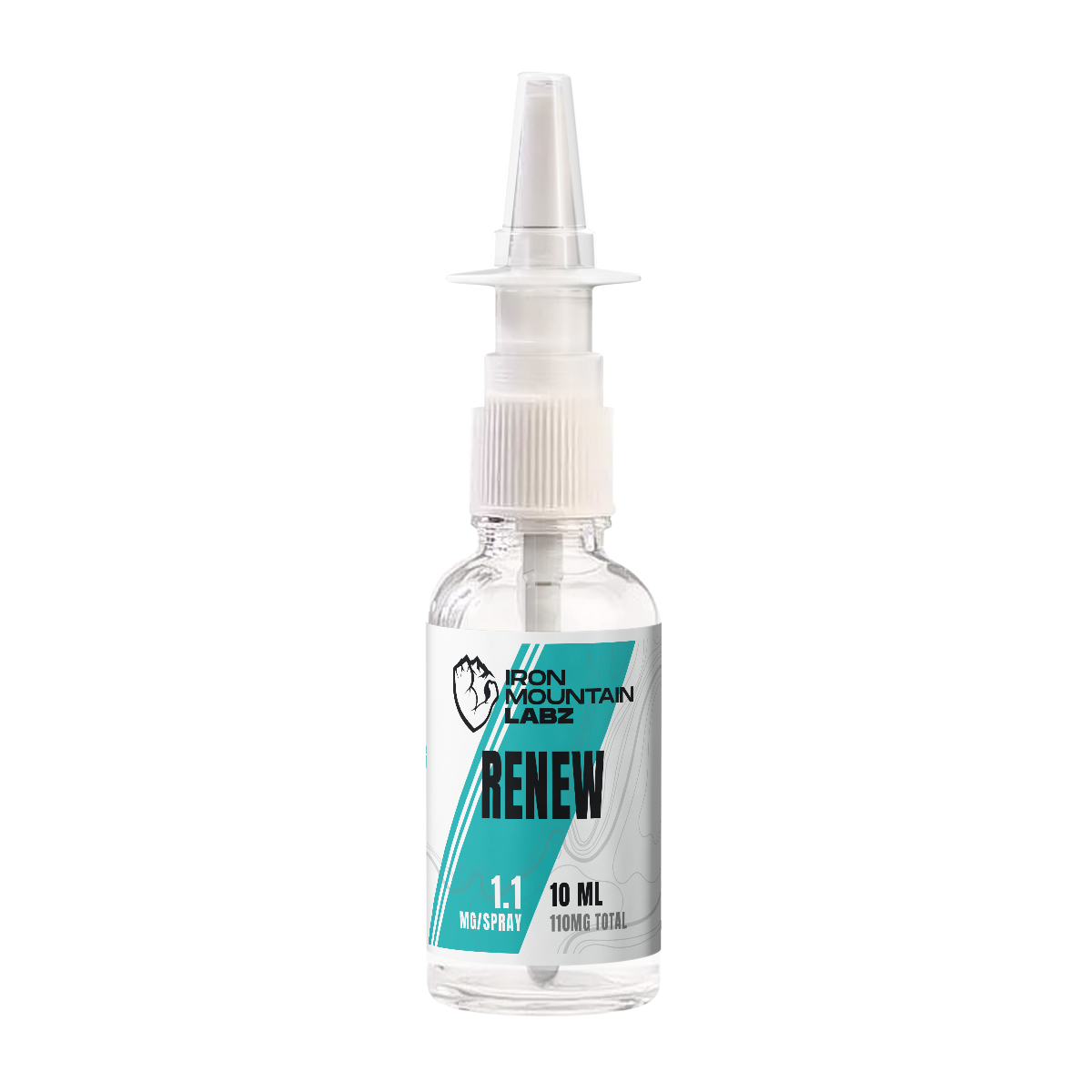
\n\n\n\nCase Study — Marcus, Age 62 (Tampa, FL): "I attempted to use an over-the-counter nasal peptide spray I bought online for $90 a bottle. I used it for six weeks straight, hoping to see improvements in my stubborn abdominal fat and afternoon fatigue. I experienced absolutely nothing except for a mild, burning sensation in my nasal passages and occasional congestion. When I eventually consulted a specialist and ran a full blood panel, my IGF-1 levels had barely budged. It turns out the formulation lacked proper absorption enhancers, and my chronic seasonal allergies meant my nasal tissue was too swollen to absorb the peptide effectively. It was a complete waste of money."
\n
 \n
\n\n
What Research Suggests and What It Doesn\'t
\nWhen assessing whether can Ipamorelin be administered nasally with genuine clinical efficacy, we have to look closely at the molecular weight and the physical laws of mucosal absorption. Peptides are fragile chains of amino acids. The nasal mucosa is designed to filter out foreign objects, meaning that large or poorly formulated peptide structures often fail to penetrate the epithelial barrier effectively.
\n\nClinical literature indicates that the bioavailability of intranasal peptides typically hovers between 5% and 20% of what would be achieved via a direct subcutaneous injection. This means that if you administer 200 mcg of Ipamorelin via an injection, you may need anywhere from 600 mcg to 1,000 mcg intranasally to achieve an equivalent systemic response. Furthermore, effective nasal peptide formulations usually require specific penetration enhancers (such as specific cyclodextrins or mild surfactants) to temporarily open tight junctions in the nasal epithelium without causing long-term cellular damage. Consumers must remain cautious: many retail-grade peptide sprays are simply reconstituted with standard saline, resulting in poor absorption and sub-optimal outcomes.
\n\n\n\n
Ingredients, Formats, and Quality Signals
\nNavigating the marketplace requires understanding exactly what is inside the bottle. High-quality nasal peptide products are distinctly different from cheap, mass-produced alternatives. Look closely at the ingredient deck and technical specifications before choosing a product path:
\n\n- \n
- Active Ingredient Clarity: The label must clearly state Ipamorelin Acetate, along with the precise milligrams per bottle (e.g., 15mg or 30mg total content) and the metered dose per pump (e.g., 150mcg or 300mcg per spray). \n
- Absorption Enhancers: Legitimate formulations often include mild, medical-grade permeation enhancers or a specialized mucoadhesive polymer that prevents the liquid from immediately running down the back of the throat. \n
- Sterility and Preservatives: Because a nasal spray tip is exposed to ambient air and nasal bacteria repeatedly, the solution must contain a safe, non-irritating preservative system (like low-concentration benzalkonium chloride or benzyl alcohol) to prevent microbial growth. \n
- Third-Party Verification: A reputable provider will always offer a verifiable Certificate of Analysis (CoA) from an independent laboratory, proving a peptide purity level of 98% or higher and confirming the product is free from heavy metals and harmful endotoxins. \n
\n\n
Comparison of Common Options
\nTo help you weigh your options realistically, the table below outlines how the intranasal route stacks up against other common administration formats in terms of cost, usability, and systemic impact.
\n\n| Format | \nTypical Dose/Use | \nPros | \nCons | \nCost (Monthly) | \nBest For | \n
|---|---|---|---|---|---|
| Subcutaneous Injection | \n200 mcg - 300 mcg once daily before bed | \n100% bioavailability; precise dosing; most backed by clinical history | \nRequires needles; must be refrigerated; inconvenient for travel | \n$80 - $150 | \nUsers seeking maximum results and cost efficiency | \n
| Premium Nasal Spray | \n400 mcg - 600 mcg daily (split doses) | \nExtremely convenient; travel-friendly; needle-free application | \nLower bioavailability; requires higher dosing; potential nasal irritation | \n$130 - $220 | \nFrequent travelers and those with severe needle aversion | \n
| Sublingual Troches/Drops | \n500 mcg daily dissolved under tongue | \nNo needles; easy to store at room temperature | \nHighly variable absorption; altered by food/drink consumption | \n$100 - $170 | \nPeople wanting an intermediate, non-invasive option | \n
| Oral Capsules (Standard) | \nNot recommended for basic Ipamorelin | \nFamiliar capsule format; highly convenient | \nExtremely poor survival rate through stomach acids and liver metabolism | \n$70 - $120 | \nNot recommended (ineffective for this specific peptide) | \n
| Transdermal Gels | \nApplied to inner arms daily | \nSteady, continuous absorption through the skin layer | \nRisk of transfer to partners/pets; can cause localized skin dryness | \n$120 - $190 | \nUsers looking for a steady baseline without sharp peaks | \n
\n\n
Buying Framework and Red Flags
\nBecause the market for lifestyle peptides can be highly unpredictable, consumers must protect both their wallets and their health by using a strict filtering process when sourcing products.
\n\nThe Discerning Buyer\'s Checklist:
\n- \n
- [ ] Does the vendor provide a batch-specific, independent laboratory Certificate of Analysis (CoA) dated within the last 6 months? \n
- [ ] Is the exact milligram content per volume clearly defined, or is it hidden behind an ambiguous "proprietary blend" label? \n
- [ ] Does the product ship in high-quality, UV-protective glass or specialized medical-grade plastic nasal pump bottles? \n
- [ ] Is the pricing realistic? (Avoid products priced suspiciously low, such as a "Buy 1 Get 2 Free" deal for $45, which heavily implies an impure or severely under-dosed substance). \n
Critical Red Flags to Watch For:
\n- \n
- The "Miracle Cure" Pitch: Avoid companies that guarantee you will instantly drop 20 pounds of fat, reverse gray hair, or completely cure age-related ailments. Genuine Ipamorelin acts subtly and takes months to show incremental wellness changes. \n
- Missing Lab Data: If a customer service representative tells you that their lab reports are "proprietary internal secrets," terminate the transaction immediately. \n
- Unmetered Pump Mechanisms: A cheap, generic spray bottle that drips or squirts uneven volumes makes it impossible to track your dosage safely. \n
 \n
\n\n
Common Mistakes and How to Avoid Them
\nEven if you secure a premium, well-formulated intranasal product, operational errors can completely sabotage your results. Avoid these three common pitfalls:
\n- \n
- Incorrect Sniffing Technique: Many users stick the nozzle deep into their nose and inhale sharply, forcing the liquid directly down their throat into the stomach. To maximize absorption, tilt your head slightly forward, insert the nozzle just past the nostril edge, point it outward toward your ear, and sniff very gently. You want the mist to coat the nasal lining, not pass through to your digestive system. \n
- Ignoring Nasal Health: Using a nasal peptide spray while suffering from active seasonal allergies, a head cold, or structural issues like a severely deviated septum will drastically reduce absorption efficiency. If your nasal passages are congested or inflamed, your body cannot absorb the compound uniformly. \n
- Inconsistent Timing around Food: Just like injections, nasal growth hormone secretagogues work best when your blood sugar and insulin levels are baseline. Administering your spray immediately after a carbohydrate-heavy meal can blunt the effectiveness of the resulting pulse. For optimal results, use the spray on an empty stomach, preferably right before bed or first thing in the morning. \n
\n\n
FAQ
\n\nIs it proven that intranasal peptide sprays actually work for age-related vitality?
\nWhile standard subcutaneous injections remain the gold standard within clinical endocrinology, data shows that intranasal peptide sprays are viable when properly formulated with permeation enhancers. The catch is that you must accept a much lower baseline bioavailability, meaning higher volumes or concentrations are mandatory to mimic the physiological impact of an injection.
\n\nHow long does it take for alternative peptide delivery methods to show visible results?
\nWhen asking how long does it take for alternative peptide delivery methods to work, patience is absolutely essential. While an injection might show sleep and recovery improvements within 2 to 3 weeks, a nasal protocol typically takes 6 to 8 weeks of consistent daily application before subtle shifts in body composition, skin elasticity, and morning energy levels become apparent.
\n\nWhat are the primary side effects of non-injectable Ipamorelin options?
\nThe side effects of non-injectable Ipamorelin options are usually localized rather than systemic. For the nasal format, users frequently report temporary nasal stinging, localized dryness, minor sneezing fits immediately post-spray, or a brief post-nasal drip. Systemic effects, though rare at standard doses, can occasionally include temporary flushing, minor headaches, or mild water retention.
\n\nCan it combine with other secretagogues like CJC-1295 in a single spray?
\nYes, you will frequently find formulations that ask: Can it combine with other secretagogues safely? Combining Ipamorelin with a GHRH like CJC-1295 (without DAC) within a single nasal solution is highly common. This pairing creates a complementary effect, where the CJC-1295 increases the number of secreting cells while the Ipamorelin amplifies the strength of the hormone pulse itself.
\n\nHow does oral vs injection/alternative peptide performance compare for men over 55?
\nWhen evaluating oral vs injection/alternative peptide performance, oral capsules perform exceptionally poorly because the liver and stomach acids aggressively dismantle the fragile peptide chains before they can reach systemic circulation. Intranasal administration stands as a highly practical alternative to injections, providing a middle ground that vastly outperforms oral options while sacrificing a portion of the potency found in a direct injection.
\n\n\n\n
A Practical 2-Week Experiment Framework
\nIf you and your regular physician decide to explore a nasal format, running a highly structured, two-week baseline experiment is a smart way to gauge your initial tolerance and mucosal reaction before committing to a multi-month investment.
\n- \n
- Days 1–3: The Sensitivity Test. Administer a single, low-dose spray (approx. 150 mcg) in one nostril just before bed on an empty stomach. Monitor for localized irritation, sneezing, or immediate headaches. Do not alter any other evening routines. \n
- Days 4–7: Establishing the Standard Baseline. If no significant tissue irritation occurs, move to a standard dose of one spray per nostril (approx. 300 mcg total) each evening. Focus intensely on proper technique: tilt your head slightly forward, point the nozzle toward the outer nasal wall, and sniff gently. \n
- Days 8–14: Tracking Subjective Markers. Maintain the evening protocol. Keep a daily log tracking specific secondary markers: note your subjective sleep depth, ease of waking up, morning joint stiffness, and overall systemic recovery after exercise. This basic log will provide invaluable data for your follow-up medical consultation. \n
\n\n
About the Author
\nReviewer Identity: Thomas Caldwell, Senior Wellness Analyst & Independent Peptide Researcher.
\nThomas has spent over twelve years reviewing emerging anti-aging protocols, biohacking frameworks, and hormone optimization trends specifically tailored for men over 50. He specializes in cutting through aggressive marketing copy to provide clear, biochemically grounded insights for consumers navigating the modern longevity marketplace.
Disclaimer: The information provided in this article is strictly for educational, informational, and entertainment purposes. It does not constitute formal medical advice, diagnosis, or treatment. Ipamorelin and related compounds are frequently categorized as research chemicals or prescription-only substances depending on your jurisdiction. Always consult with a qualified, board-certified physician or endocrinologist before starting, altering, or stopping any peptide protocol or healthcare regimen.
\n
Discussion